Японы уран зохиол
Green Onions
«In a café in Jinbōchō, the used-bookstore neighborhood of Tokyo, there is a waitress named O-Kimi.»
~ 18 min read·Түвшин
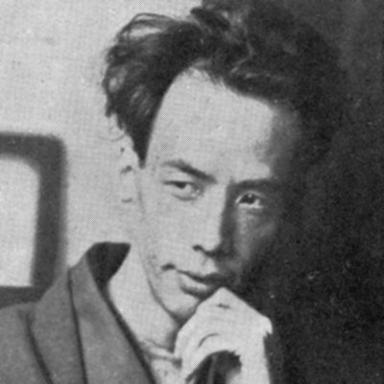
Ryūnosuke Akutagawa was born in Tokyo in 1892, and from the very beginning, something was not quite right. His mother lost her mind when he was still an infant, and the boy was given to relatives to raise. Perhaps this early darkness — the knowledge that the people closest to you can suddenly become strangers — planted the seed of everything he would later write. He was a brilliant student, hungry for books in any language he could get his hands on: Japanese classics, Chinese poetry, European novels. He devoured them all, searching, it seemed, for some truth that none of them quite contained.
He began publishing stories while still at university, and his talent was recognized almost immediately. His early masterpiece, “Rashōmon,” took an old tale and turned it inside out, revealing the small, ugly lies people tell themselves in order to survive. “In a Grove” did something similar — the same event told by different witnesses, each version contradicting the last, until the reader is left wondering whether truth exists at all. These stories, and dozens of others, made him the most celebrated young writer in Japan. He wrote about samurai and artists, thieves and priests, always peeling back the surface of human behaviour to expose the doubt and self-deception underneath.
But Akutagawa carried his own doubts like stones in his pockets. His health was poor. He could not sleep. He feared he had inherited his mother’s illness. In 1927, at the age of thirty-five, he took his own life, leaving behind a body of work that was small in size but vast in its understanding of the human heart. Today, Japan’s most important literary prize bears his name — a fitting honour for a writer who believed that every story, no matter how old, still had something uncomfortable and necessary to say.
«In a café in Jinbōchō, the used-bookstore neighborhood of Tokyo, there is a waitress named O-Kimi.»
«In the ruined city of Kyoto, foxes and badgers had moved into the crumbling gate — and thieves soon followed.»
«His first thought was to stamp it to death, but as he lifted his foot, he told himself …»
«He was always a man of great generosity who shared his joys with the wider world and kept in mind even the humblest of those under his care.»