Оросын уран зохиол
The Diary of a Madman
«'You seem to have nothing but confusion in your head,' my chief keeps telling me.»
~ 41 min read·Түвшин
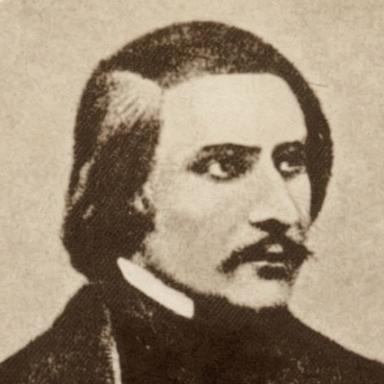
Nikolai Vasilievich Gogol was born in 1809 in the Ukrainian countryside — in the province of Poltava, to be exact — where the evenings were long and golden, the dumplings were fat, the Cossacks were proud, and the devil himself might appear at any moment on a road between two villages, looking for trouble or perhaps just a warm coat. His father was a minor landowner who wrote comic plays; his mother was a nervous, deeply religious woman who believed her son was a genius, which, as it turned out, he was — though of such a peculiar and unsettling kind that it would have been better, perhaps, for everyone’s nerves, if he had simply gone into the civil service and stayed there. At nineteen he left for St. Petersburg, that grey, damp, magnificent, terrible city, where he hoped to become an actor, or a poet, or something grand. He became instead a rather bad history lecturer and a rather extraordinary writer.
It began with Ukraine — with the folk tales, the witches, the village fairs, and the fat, quarrelsome Cossacks of Evenings on a Farm Near Dikanka. But soon his gaze turned to St. Petersburg, and what he saw there was magnificent and horrible: a nose that detaches itself from a man’s face and rides around the city in a carriage; a poor clerk who buys an overcoat and then dies and haunts the streets; mad diarists, petty officials, and swindlers of every variety. His stories — “The Nose,” “The Overcoat,” “Diary of a Madman,” “Nevsky Prospect” — were like nothing anyone had written before: wildly funny on one page and, on the next, so full of pity for small, crushed human beings that you wanted to look away. His great novel Dead Souls — in which a man travels from town to town buying the names of dead serfs from their foolish, greedy, dreaming owners — gave Russia a portrait of itself so accurate and so grotesque that the country has never quite recovered from the shock.
But here the story takes a dark turn, as stories about Gogol tend to do. He grew ill, restless, tormented by religion. He fell under the influence of a fanatical priest. He burned the second part of Dead Souls — burned it! — ten days before his death, in 1852, at the age of forty-two, in Moscow, having more or less starved himself in a fit of spiritual terror. He had given Russia its greatest comic prose, and then he had tried to take it back. It did not work. Dostoevsky reportedly said, “We all came out of Gogol’s ‘Overcoat‘,” and whether or not he actually said it, it was true. Everything that came after — the pity, the laughter, the madness, the huge and aching Russian soul — you could find it all, already, in Gogol, hiding behind a nose.
«'You seem to have nothing but confusion in your head,' my chief keeps telling me.»
«A very strange thing happened in St Petersburg on the 25th of March.»