Оросын уран зохиол
In Paris
«From year to year, from day to day, in our heart of hearts there's only one thing we wait for – a meeting that will bring happiness and love.»
~ 18 min read·Түвшин
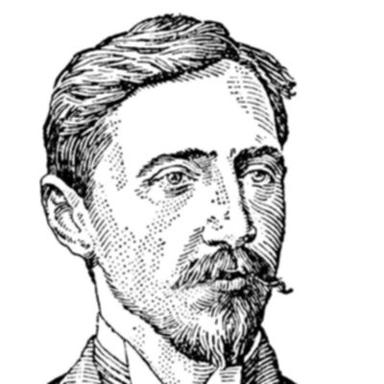
Ivan Alexeyevich Bunin was born in 1870, in the Russian city of Voronezh, into a family of old nobility that had already lost most of its land, most of its money, and much of its place in the world. He grew up on a country estate in the south, among apple orchards and dry summer grass and the particular golden light of the Russian steppe — and all his life he would carry that light inside him, the way one carries the smell of a room from childhood, sharp and sweet and impossible to explain to anyone who was not there. He did not finish university. He worked small jobs at newspapers, wandered from town to town, and wrote — always wrote — with the careful, quiet attention of a man watching the last warmth leave an autumn evening.
His early poems and stories brought him the Pushkin Prize, and soon he was recognized as one of the finest stylists in all of Russian literature. He wrote The Village, a dark portrait of peasant life that shocked readers with its honesty, and Dry Valley, and the stories collected in The Gentleman from San Francisco, each one precise and sensory, full of heat and cold and the taste of things. He cared deeply about the physical world — the color of dust on a road, the weight of summer air before a storm — and he believed that beauty, even painful beauty, was the truest thing a writer could offer. When revolution came to Russia in 1917, Bunin could not accept it. He left, first to Constantinople, then to Paris, where he would live the rest of his life in exile, poor but proud, writing about a country he could never return to.
In 1933 he became the first Russian writer to receive the Nobel Prize in Literature, and the news reached him in a small cinema in the south of France, where he had gone to escape the cold of his apartment. He spent his final years in Paris, still writing, still remembering — the orchards, the dust, the light falling through shutters onto a wooden floor. He died in 1953, with almost nothing, having given the world some of the most beautiful sentences ever written in Russian. His greatest work, Dark Avenues, a collection of stories about love and memory, was written entirely in exile, proof that a homeland taken away can sometimes be kept alive, word by word, on the page.
«From year to year, from day to day, in our heart of hearts there's only one thing we wait for – a meeting that will bring happiness and love.»
«He had worked without stopping, and the workers he employed by the thousand in his factories knew what that meant.»