Оросын уран зохиол
The Death of Dolgushov
«The veils of battle moved towards the town. At noon Korochayev rode past us in a black cloak.»
~ 6 min read·Түвшин
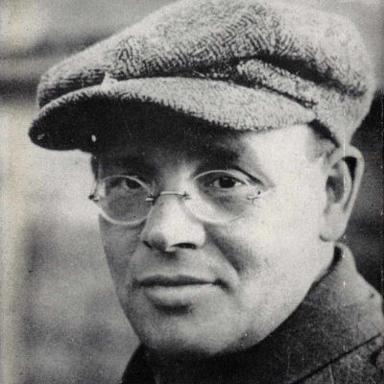
Isaak Emmanuilovich Babel was born in 1894 in Odessa — a city of sun, sea, gangsters, and Jews who did not behave the way Jews were supposed to behave. His father sold farm equipment. The boy wore glasses and studied violin and Talmud, but what he wanted was to see everything, even the things a boy in glasses is not supposed to see. Especially those things. He went to Kiev, then to St. Petersburg. Gorky published his first stories and then told him: stop writing, go into the world. So Babel went. He fought with the Red Cavalry in the Polish campaign of 1920. He was a Jewish intellectual riding with Cossacks — men who ate, killed, and prayed with equal force. He watched them. He wrote it down in short, bright sentences that hit like fists.
Red Cavalry, the book that came from this war, made him famous. Each story was small and hard, like a stone that had been polished until it burned. Cossacks slaughtered prisoners and then lay in the grass talking about love. Rabbis wept over ruined synagogues. A man killed a goose and felt the whole universe shift. The sentences were precise and strange and beautiful in a way that made people uncomfortable. His Odessa Tales did something different — they turned the Jewish gangsters of the Moldavanka district into kings, mythical figures who robbed and murdered with enormous style. Benya Krik, their leader, wore a chocolate jacket and cream pants and set fire to a police station. These stories were wild and funny, and underneath them was something sharp and sad.
Babel wrote slowly. He joked that he was the master of a new literary genre: silence. Stalin’s Russia did not appreciate silence, or strangeness, or sentences that said two things at once. In the 1930s, Babel published less and less. He was arrested in May 1939 and charged with crimes he had not committed. His manuscripts were taken. He was shot in January 1940, at the age of forty-five, in a prison basement in Moscow. For decades after, his name was erased from Soviet literature — his books removed, his existence denied. But stories that burn do not go out so easily. His work survived, and readers around the world discovered what Russian readers had known all along: that Babel could put more life into a single paragraph than most writers fit into a whole novel.
«The veils of battle moved towards the town. At noon Korochayev rode past us in a black cloak.»
«Dear Comrade Editor, I want to describe to you how women without political understanding are doing us nothing but harm.»
«Savitsky, commander of the Sixth Division, stood up when he saw me, and I was amazed at the beauty of his huge body.»