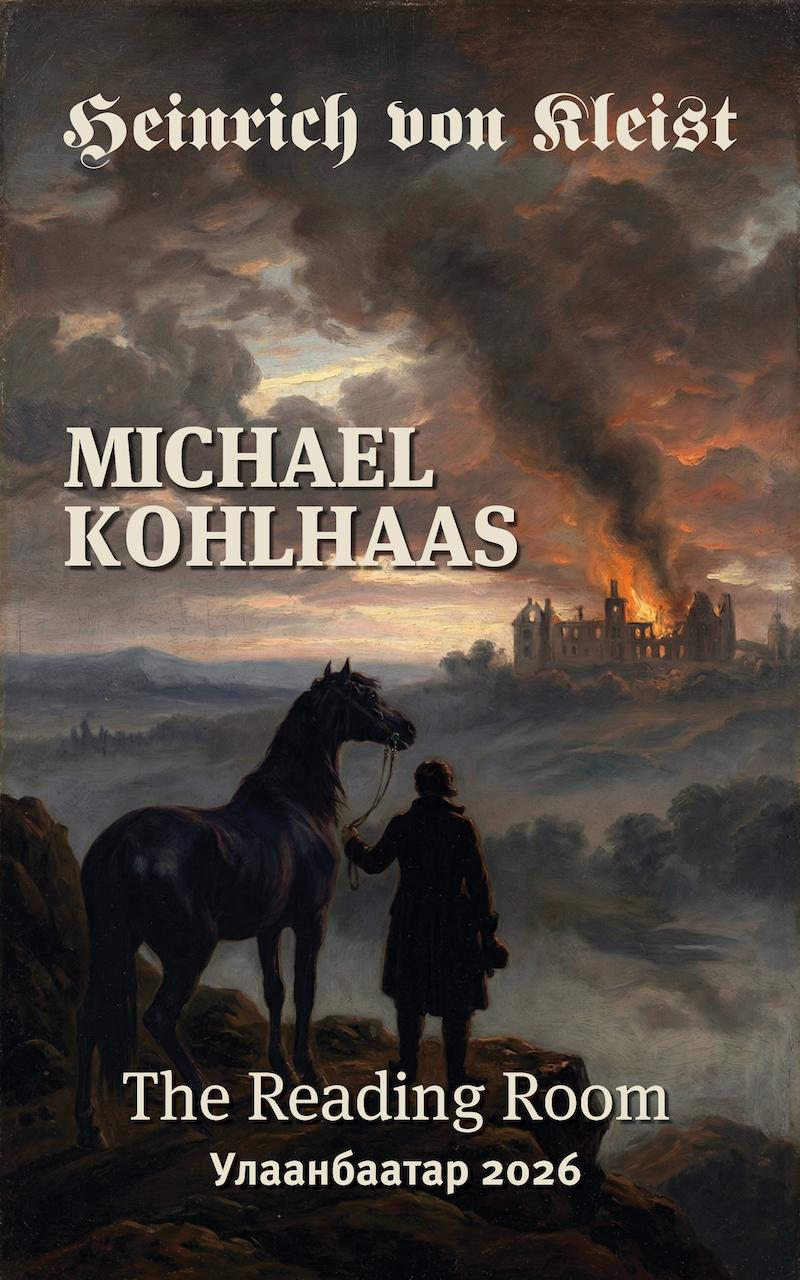
Heinrich von Kleist was born in 1777 in Frankfurt an der Oder, Prussia, into a military family that expected him to follow the same path — and for a time he did, serving as a soldier before something inside him broke loose. He left the army. He abandoned his studies. He could not sit still. A reading of Kant’s philosophy shattered his belief that truth could ever be known with certainty, and this crisis — sudden, total, like a trapdoor opening beneath his feet — drove him toward writing with a desperate energy, as though words were the only rope left to hold.
In the years that followed, restless and often poor, he produced work of extraordinary violence and tenderness: the novellas Michael Kohlhaas and The Marquise of O—, the plays The Broken Jug and Penthesilea, each one gripped by characters caught in situations where justice and madness, love and destruction, twist around each other until they become impossible to separate. His sentences move the way his characters do — headlong, breathless, turning sharply just when you think you understand where they are going.
He was not famous in his lifetime. The great Goethe dismissed him. Publishers hesitated. Yet Kleist kept writing, founding a literary journal, pushing forward. He died in 1811, at the age of thirty-four, by his own hand, beside the Wannsee lake in Berlin. It was only long after his death that the world recognised what he had done: he had written some of the most powerful, most unsettling stories in the German language — stories that still, two centuries later, seize the reader and refuse to let go.