Америкийн уран зохиол
The Tell-Tale Heart
«I heard all things in the heaven and in the earth—how, then, am I mad?»
~ 11 min read·Түвшин
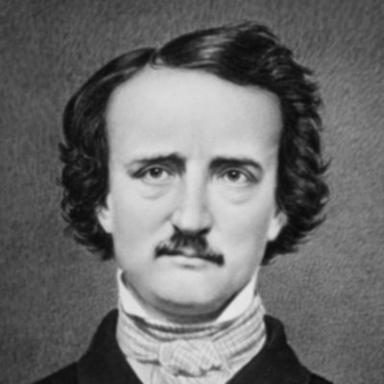
Edgar Allan Poe was born in Boston in 1809, but let it be understood from the start that the circumstances of his life were marked by a darkness no less terrible for being entirely real. His mother, an actress, died before he was three. His father had already vanished. A wealthy merchant named John Allan took the boy in — raised him, educated him, but never quite loved him enough, and Edgar never quite forgave him for it. He attended the University of Virginia, where he read everything and drank too much, and later West Point, from which he was expelled. He was, from the beginning, a man at war with the world and with himself.
He became a writer — or rather, writing became the only thing that would have him. He worked as an editor and critic for magazines in Richmond, Philadelphia, and New York, and his pen was sharp enough to make many enemies. But it was his stories and poems that made him immortal. Tales such as “The Tell-Tale Heart,” “The Fall of the House of Usher,” “The Masque of the Red Death,” and “The Cask of Amontillado” explored the deepest rooms of the human mind — guilt, madness, obsession, the dread of being buried alive. He invented the detective story with “The Murders in the Rue Morgue.” His poem “The Raven,” with its terrible, repeating refrain of Nevermore, made him famous overnight, though fame paid almost nothing.
Poe married his young cousin Virginia Clemm, and her slow death from tuberculosis in 1847 broke something in him that had perhaps always been close to breaking. He drank. He wandered. He was found delirious on the streets of Baltimore in October 1849, wearing clothes that were not his own, and he died days later at the age of forty. No one knows exactly what happened. It was the kind of mystery he might have written himself — except that there was no brilliant detective waiting at the end to explain it all away. There was only silence, and the dark, and the sound of something tapping, tapping at the door.
«I heard all things in the heaven and in the earth—how, then, am I mad?»
«With my first glimpse of the building, a sense of unbearable gloom filled my spirit.»