Оросын уран зохиол
The Lady with the Little Dog
«No one knew who she was and so she was simply called the lady with the little dog.»
~ 36 min read·Түвшин
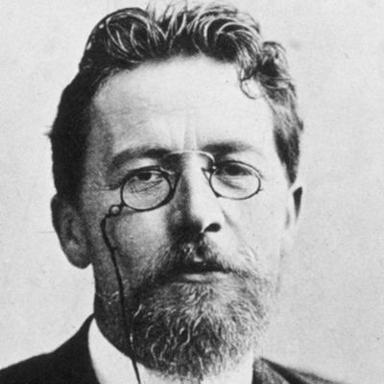
Anton Pavlovich Chekhov was born in 1860 in Taganrog, a small port town in southern Russia — the kind of place where nothing much happened, and yet everything did, if one looked carefully enough. His father sold groceries and beat his children; his grandfather had been a serf. The family moved to Moscow, but there was no money, so young Anton stayed behind to finish school alone. He began writing short, funny sketches for magazines to pay for his medical studies, and before long he discovered that he was two things at once: a doctor and a writer. “Medicine is my lawful wife,” he once said, “and literature is my mistress.” He never quite gave up either one.
His early stories were comic, sometimes silly, but gradually they grew quieter, stranger, more honest. Stories like “The Lady with the Dog,” “Ward No. 6,” “Gooseberries,” and “The Darling” did something no one had quite done before — they ended without ending, left their characters mid-thought, mid-life, still hoping or still failing to hope. He wrote about doctors, teachers, landowners, servants, children, and lonely people at parties. He did not judge them. He simply noticed everything. His plays — The Seagull, Uncle Vanya, Three Sisters, The Cherry Orchard — changed the theatre forever, though audiences at first were not always sure what had happened, since nobody died heroically and nobody gave a satisfying speech.
Chekhov himself was tall, gentle, and often ill. He had tuberculosis for much of his adult life. He built schools, treated peasants for free, and travelled to a prison island called Sakhalin to document the suffering there, because he believed a writer should be useful. He married the actress Olga Knipper late in life. He died in 1904, at forty-four, in a hotel room in Germany. The doctor ordered champagne. Chekhov drank it, said “It’s been a long time since I’ve had champagne,” turned on his side, and was gone. It was, one might say, a very Chekhov ending — quiet, ordinary, and somehow unbearable.
«No one knew who she was and so she was simply called the lady with the little dog.»
«How does love start? Only one true thing has ever been said about love, which is that this is a great mystery.»
«I remember once when I was travelling along the shores of Lake Baikal, I met a Buryat girl, dressed in a shirt and blue trousers, sitting on a horse.»
«There ought to be someone with a little hammer outside the door of every contented, happy person, constantly tapping away to remind him that there are unhappy people in the world. But there is no person with a little hammer; happy people are wrapped up in their own lives.»
«He was someone who had a constant and overwhelming need to wrap himself in a protective cover, to create a kind of case for himself that would separate and protect him from outside influences.»
«The sky turns a soft lilac colour. The ocean frowns at first as it looks at this wonderful, fascinating sky, but it too then takes on those gentle, bright, passionate colours which are difficult to describe in human words.»