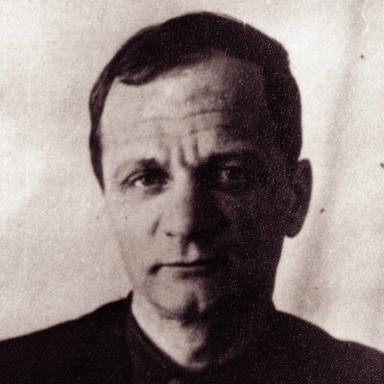
Andrei Platonovich Platonov was born in 1899, in the workers’ settlement of Yamskaya, on the edge of the city of Voronezh, the eldest of eleven children in a family where there was never quite enough — not enough bread, not enough warmth, not enough time for a boy to be a boy before he had to become useful. His father worked in the railway workshops, repairing locomotives, and the young Platonov grew up among metal and grease and the sound of hammers, and he came to believe that machines had feelings, that the earth itself was alive and waiting for something, and that the poorest people understood this better than anyone. He worked from the age of thirteen — as an office boy, a foundry worker, an electrician — and he began to write the way a person begins to breathe after being underwater: not because it was pleasant, but because it was necessary.
He trained as an engineer and spent years building wells and draining swamps in the dry countryside around Voronezh, trying to bring water to people who had none. This work — real, physical, exhausting work — never left his writing. His characters dig, build, walk enormous distances, and search for something they cannot name. His novel Chevengur told the story of wanderers looking for a perfect community and not quite finding it. The Foundation Pit described workers digging the foundation for a great building that never gets built. Soviet authorities did not publish these books during his lifetime. They said his writing was strange, which it was. They said it was dangerous, which it also was — not because Platonov was against the revolution, but because he loved its promises so honestly that he could see where they were broken.
Stalin himself wrote an insult in the margin of one of Platonov’s stories. His son was arrested and sent to a prison camp, and when the boy returned, sick with tuberculosis, Platonov nursed him and caught the disease himself. He spent his last years writing folk tales for children, nearly forgotten, living in a basement room in Moscow. He died in 1951, poor and unrecognized. But his sentences — clumsy and beautiful, as if the Russian language itself were a worker trying to express something too large for words — survived. Today he is read as one of the most original writers of the twentieth century, a man who wrote about the human soul the way an engineer writes about a machine: with love, and with the knowledge that it will, sooner or later, break down.